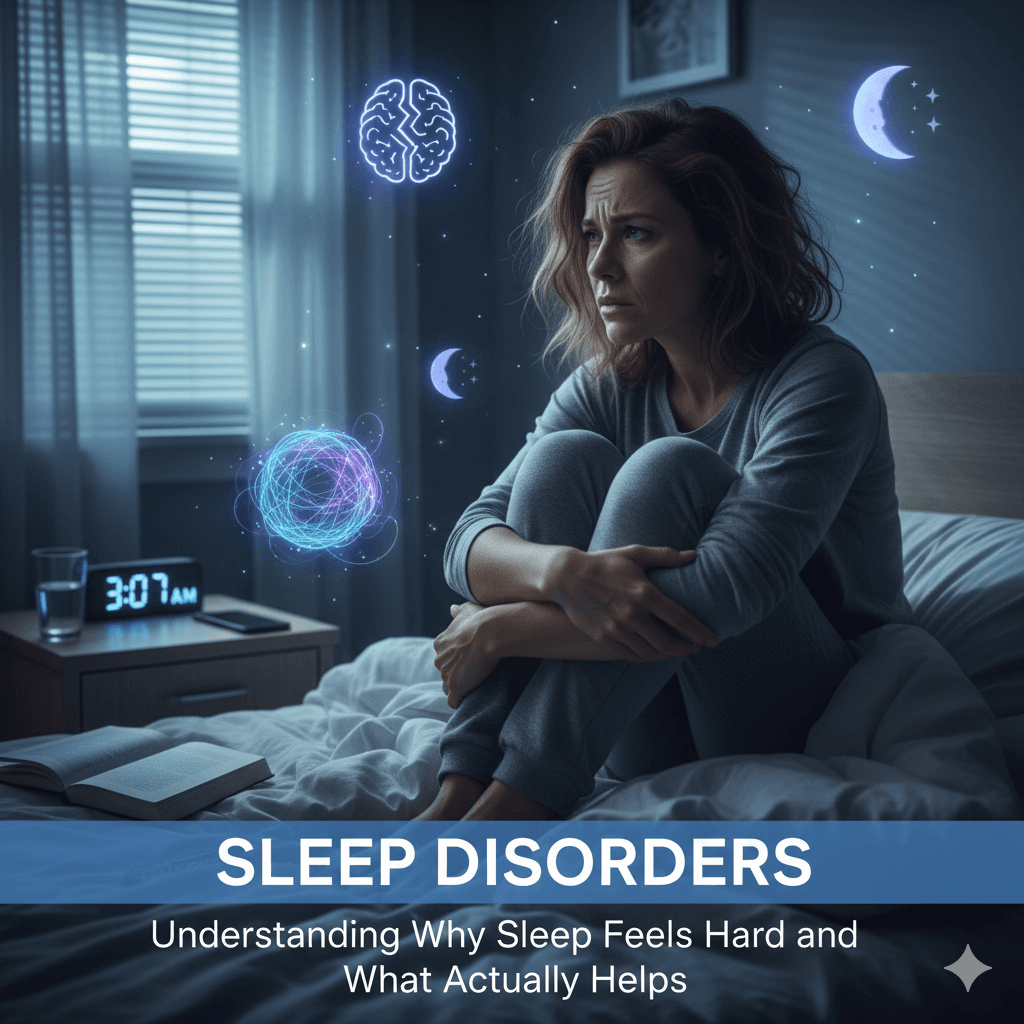
Introduction: When Sleep Problems Stop Feeling Temporary
Almost everyone has a bad night of sleep sometimes.
But when poor sleep becomes routine - when nights feel long, restless, and frustrating - you may start wondering:
“Is this just stress… or do I have a sleep disorder?”
If you are here, chances are:
You’re tired even after sleeping
Nights feel unpredictable
Your mind doesn’t shut down
Sleep anxiety has become part of your routine
This blog is not here to scare you.
It’s here to help you understand sleep disorders in a calm, human way - without medical jargon or unrealistic advice.
What Is a Sleep Disorder? (In Simple Terms)
A sleep disorder is not just "sleeping less."
It’s when your sleep pattern becomes consistently disrupted, affecting how you feel, function, and cope during the day.
Sleep disorders can impact:
Falling asleep
Staying asleep
Sleep quality
Daytime energy
Emotional balance
And most importantly - they affect your relationship with rest.
Common Signs You Might Be Experiencing a Sleep Disorder
People often search:
“Do I have a sleep disorder?”
“Why am I always tired?”
“Why can’t I sleep properly?”
Here are realistic signs to notice:
Trouble falling asleep most nights
Waking up multiple times
Early morning awakenings
Feeling unrefreshed after sleep
Daytime fatigue or brain fog
Irritability or low mood
Anxiety around bedtime
Dependence on naps or caffeine
You don’t need all symptoms.
Even a few, consistently, matter.
The Most Common Types of Sleep Disorders (Explained Gently)
1. Insomnia (The Most Widespread)
Insomnia isn’t just about lack of sleep.
It’s about fear and frustration around sleep.
People with insomnia often:
Try very hard to sleep
Worry about the next night
Feel alert when lying down
The cycle continues because pressure increases wakefulness.
2. Sleep Anxiety (Often Overlooked)
Sleep anxiety develops when bedtime becomes stressful.
Thoughts like:
“What if I don’t sleep again?”
“Tomorrow will be ruined.”
Anxiety activates the nervous system - exactly when it should calm down.
3. Circadian Rhythm Disorders
Your body has an internal clock.
When sleep and wake times are inconsistent, this clock becomes confused.
This often happens due to:
Late-night screen use
Irregular schedules
Shift work
Weekend sleep swings
4. Restless Sleep and Fragmented Sleep
Some people sleep, but never deeply.
Sleep may be:
Light
Interrupted
Non-restorative
Stress and emotional overload often play a role.
5. Stress-Related Sleep Disorders
Chronic stress keeps the body in survival mode.
Even at night, the nervous system stays alert.
Sleep becomes shallow and unpredictable.
Why Sleep Disorders Are So Common Today
Sleep disorders are not a personal failure.
They are a response to modern life.
Contributors include:
Constant mental stimulation
Emotional overload
Performance pressure
Lack of true rest
Fear of slowing down
Our bodies haven’t evolved for 24/7 alertness.
The Hidden Role of the Nervous System
Sleep is controlled by safety.
When the nervous system feels safe, sleep happens.
When it feels threatened - by stress, worry, or pressure - wakefulness takes over.
Many sleep disorders are actually nervous system disorders, not sleep defects.
Why Forcing Sleep Makes Things Worse
Trying harder sends the wrong signal.
Effort equals danger to the brain.
That’s why:
Lying in bed feels restless
Thoughts get louder
The body stays alert
Sleep improves when pressure reduces.
What Actually Helps With Sleep Disorders (Realistic Approach)
1. Shift the Goal From Sleep to Rest
Rest removes pressure.
Sleep often follows.
2. Create Predictable, Gentle Evenings
You don’t need a perfect routine.
You need signals of safety:
Dim lights
Slower pace
Less stimulation
3. Calm the Nervous System First
Sleep problems are rarely fixed by bedtime hacks alone.
Daytime calm matters.
Gentle practices include:
Slow breathing
Short pauses
Doing nothing intentionally
4. Reduce Sleep Monitoring
Constantly checking the clock increases anxiety.
Trust your body more than numbers.
5. Be Consistent, Not Extreme
Consistency resets the internal clock.
Extremes confuse it.
Natural Ways to Support Better Sleep
Morning sunlight exposure
Gentle movement during the day
Limiting late caffeine
Emotional decompression
Quiet, low-stimulation evenings
Small shifts matter.
When to Consider Professional Help
If sleep disorders persist for months:
You’re not weak
You’re not failing
Support can help regulate patterns and reduce anxiety.
A Kinder Perspective on Sleep Disorders
You are not broken.
Your system is asking for safety.
Sleep disorders are signals - not flaws.
Final Thoughts: Healing Sleep Takes Gentleness
Improving sleep is not about control.
It’s about trust.
Go slowly.
Your body knows how to rest.
...
Sometimes the path to better sleep begins with stopping the fight against it.